Heavy Structural Concrete
Load-Bearing Systems Built to Specification
Heavy Structural Concrete in Huntsville for commercial foundations and complex load-bearing systems on multi-unit and general contractor projects
Barnes Contracting delivers heavy structural concrete work for general contractors and developers managing large commercial foundations, structural pours, and load-bearing concrete systems that require precise engineering coordination and specification compliance. Your project demands experienced crews who understand rebar layout verification, formwork complexity, and the structural tolerances that determine whether inspections pass or schedules slip. Commercial and multi-unit developments in Huntsville depend on structural concrete teams that manage sequencing, code requirements, and the coordination between trades that keeps timelines intact.
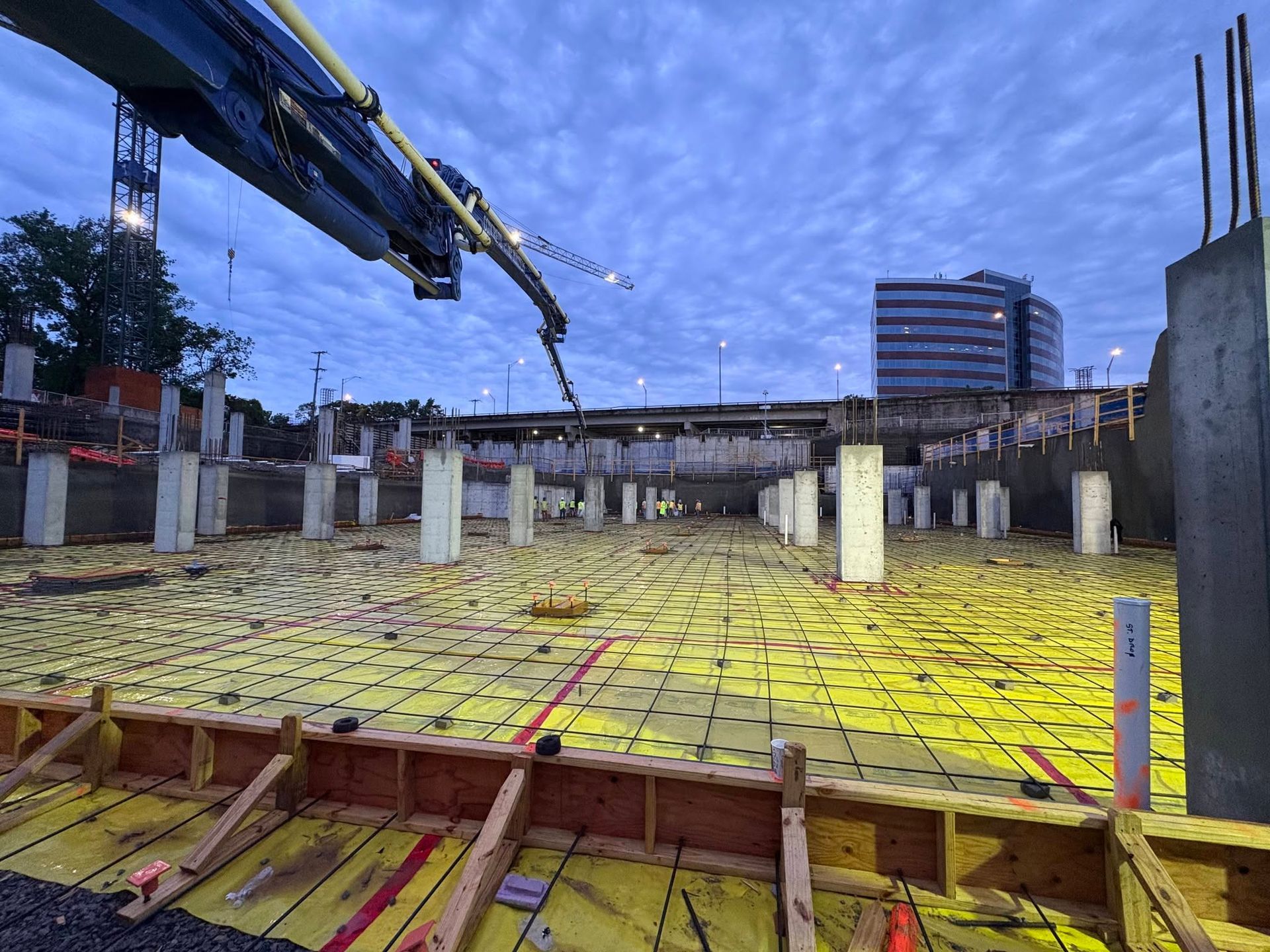
This work involves engineering coordination before the pour, rebar layout and tie verification to meet structural drawings, formwork built for complex shapes and loads, concrete placement with proper sequencing to avoid cold joints, and finishing that prepares surfaces for inspection readiness. The crew manages specifications line by line, because structural tolerances leave no margin for approximation or field adjustments that compromise load capacity.
Request a scope review and timeline assessment to determine crew requirements and sequencing for your structural concrete package.
What Proper Structural Concrete Requires
Heavy structural concrete begins with engineering coordination that confirms rebar schedules, embedment locations, and pour sequencing before formwork goes up. Your crew verifies rebar spacing and tie patterns against structural drawings, because inspection failures at this stage mean tearing out formed sections and resetting schedules. Formwork must handle the lateral pressure of high-volume pours and maintain dimensional accuracy under load, which requires bracing calculations and material selection that account for pour height and concrete weight.
Once the pour is complete and curing protocols are followed, you see foundations and structural elements that meet load-bearing specifications, pass inspection without callbacks, and provide the dimensional accuracy that allows framing and mechanical trades to proceed without field corrections. Surfaces are finished to the specified tolerance, embedments are located within acceptable variance, and the structure performs as the engineer designed it. Barnes Contracting coordinates each phase from layout through final inspection, managing the crew expertise and sequencing discipline that commercial projects require.
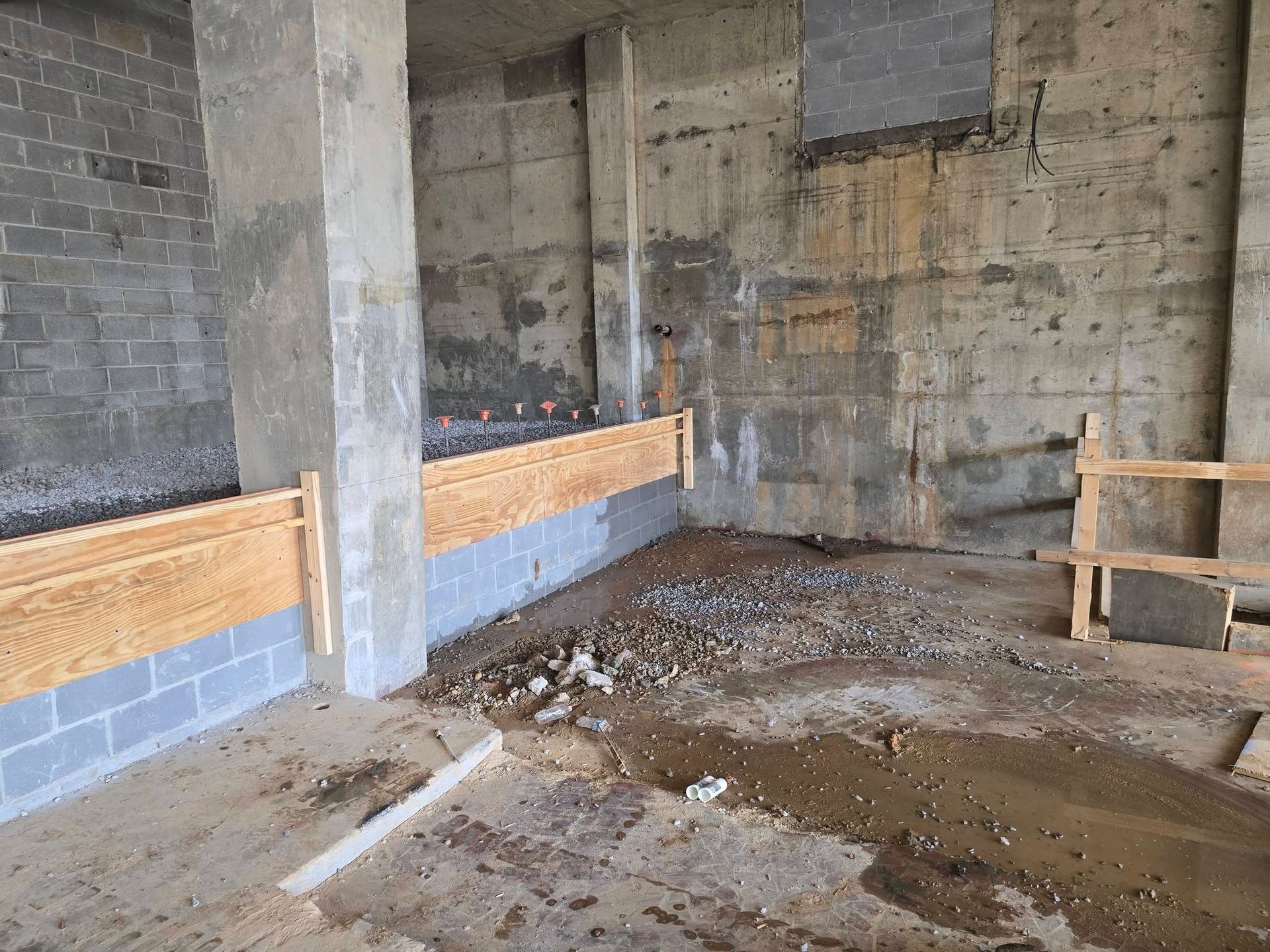
Structural concrete includes placement, finishing, and curing management, but excludes post-tensioning installation, epoxy anchor drilling after cure, and decorative surface treatments. Projects in South Huntsville development zones and commercial corridors often involve multi-phase pours where timing between sections affects structural integrity, so sequencing decisions are made with the full scope in view.
Questions About Structural Concrete Work
General contractors and developers managing commercial projects in Huntsville often ask about crew capabilities, inspection readiness, and how structural concrete differs from standard flatwork before committing to a contractor.
What happens during engineering coordination before the pour?
The crew reviews structural drawings with the engineer or general contractor to confirm rebar schedules, embedment locations, pour sequencing, and any cold joint provisions, ensuring that formwork design matches the load requirements and dimensional tolerances specified in the plans.
How is rebar layout verified before concrete placement?
Rebar spacing, tie patterns, and lap lengths are measured against the structural drawings, and any conflicts with embedments or penetrations are resolved before inspection, because once concrete is placed, rebar position cannot be corrected without removing hardened material.
What does inspection readiness mean for structural concrete?
Surfaces meet specified tolerances, embedments are located within acceptable variance, rebar is tied and positioned correctly, and all documentation is available for the building inspector, so the project moves forward without delays or re-inspection requirements.
When should structural concrete be scheduled relative to other trades?
Structural pours must be sequenced to allow curing time before load application, and coordination with framing, mechanical, and plumbing trades ensures that embedments and penetrations are placed correctly during the pour rather than drilled or cut afterward.
What crew experience is necessary for heavy structural work?
Teams must include members who have managed formwork under high lateral loads, verified rebar against structural drawings, coordinated multi-phase pours, and worked with inspectors on commercial projects, because structural concrete does not tolerate the learning curve that smaller pours might absorb.
Barnes Contracting brings field engineering experience and general superintendent-level structural capability to commercial projects across the Huntsville area. Schedule a project consultation to review your structural concrete scope, crew requirements, and sequencing strategy.